Our community is centered upon regular participation in services, prayer, music, and beauty of the Holy, Catholic and Apostolic Church.
Weekly Worship
Sunday Services
Matins – 9:00 AM
Divine Liturgy – 10:00 AM
Coffee Fellowship following Divine Liturgy
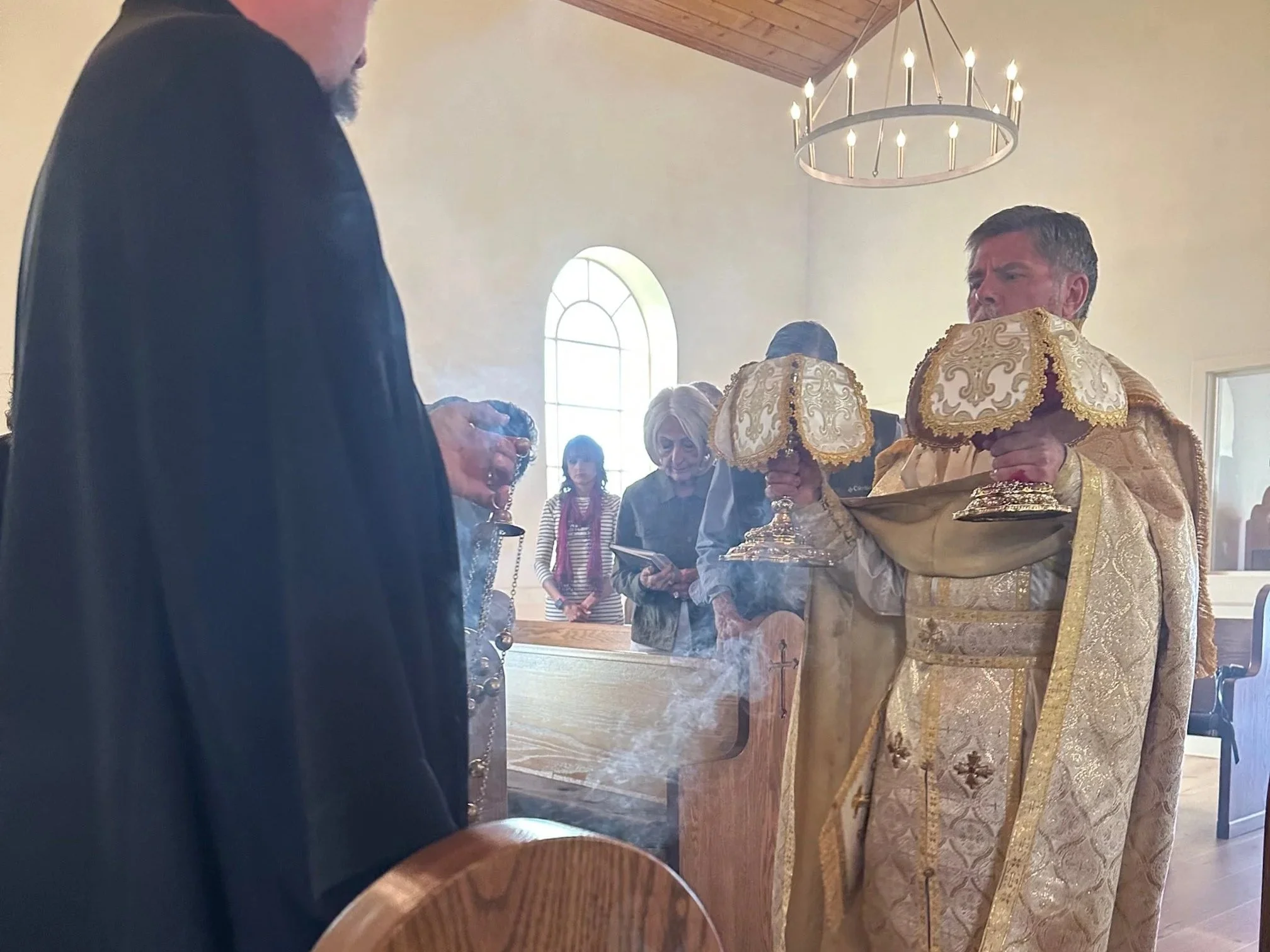
The Divine Liturgy in the Orthodox Church is the central act of Christian worship, primarily focused on the Holy Eucharist (communion), where bread and wine are transformed into the Body and Blood of Christ. Divine Liturgy consists of two main parts: the Liturgy of the Catechumens, which includes readings and teachings, and the Liturgy of the Faithful, where the Eucharist is celebrated, emphasizing communal participation and the presence of God among the worshippers. At Saint John’s, we celebrate Divine Liturgy every Sunday morning, and also on certain Feast Days throughout the year.
Matins or “Orthros” is an important morning service in the Eastern Orthodox Church, typically held daily in monasteries and on Sundays or feast days in parishes. The service includes prayers, psalms, hymns, and readings that prepare the faithful for the Divine Liturgy.
Saturdays
Great Vespers – 5:00 PM
Vespers Services can be celebrated daily in the Orthodox Church. The service is held at sunset – the beginning of the new liturgical day. This short but beautiful service includes opening prayers, hymns and psalms, petitions for peace and blessings, and a dismissal prayer. At Saint John’s, we celebrate Great Vespers every Saturday evening at 5:00 PM.
The sacrament of confession is available by appointment following Vespers.
The Sacraments
Sacraments and Services of the Orthodox Church – The Orthodox Faith is rich in Holy Tradition and filled with services and fasting periods throughout the year commemorating the Feast Days of Christ, the Most Holy Theotokos (the Mother of God), and the Saints. At the center of our worship are holy sacraments of the church. These include:
-
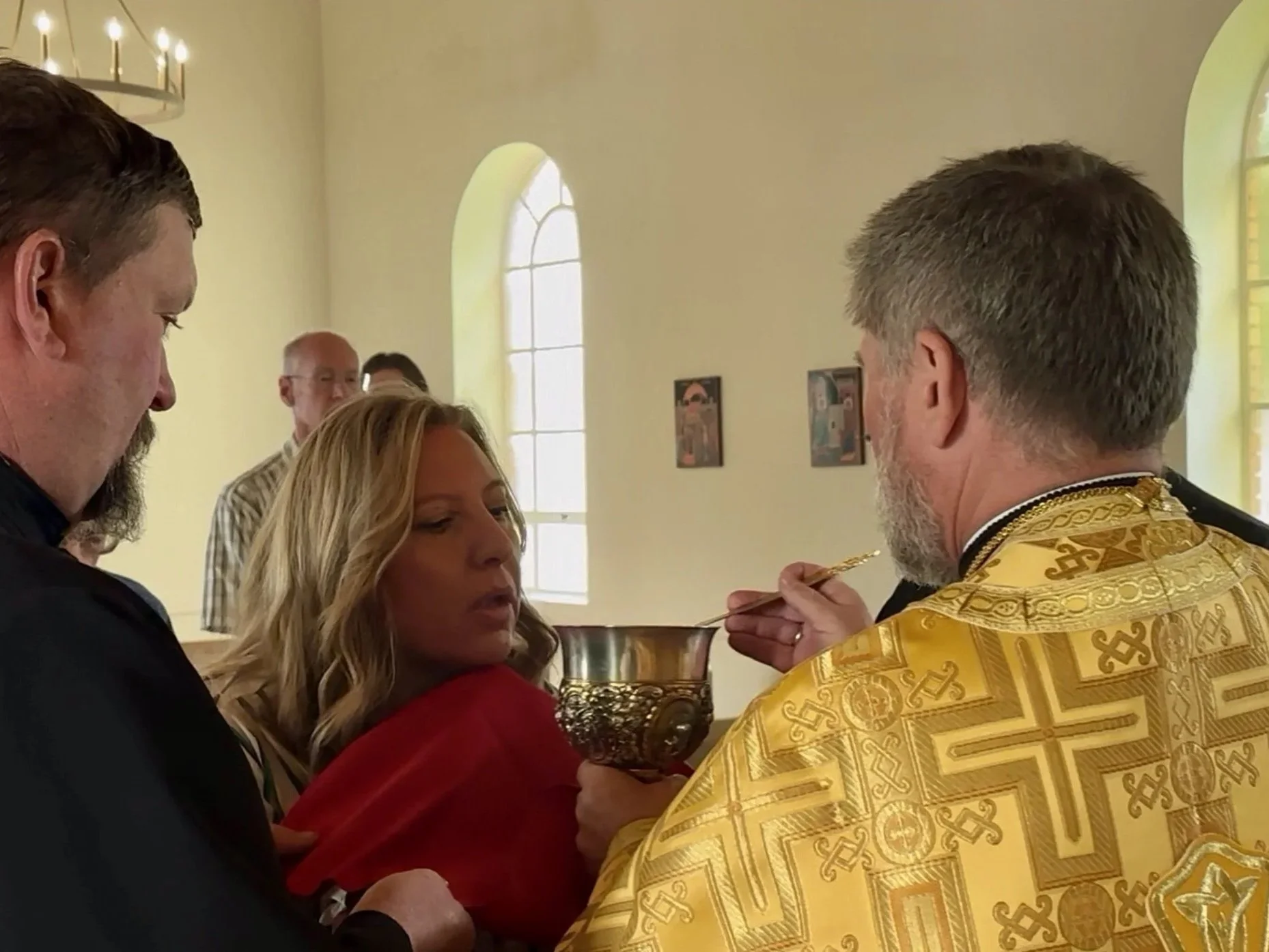
The Holy Eucharist (Holy Communion) is the central and most important worship experience of the Orthodox Church. Often referred to as the "Sacrament of Sacraments", it is the Church's celebration of the Death and Resurrection of Christ offered every Sunday and Holy day. All the other Sacraments of the Church lead toward and flow from the Eucharist, which is at the center of the life of the Church.
-
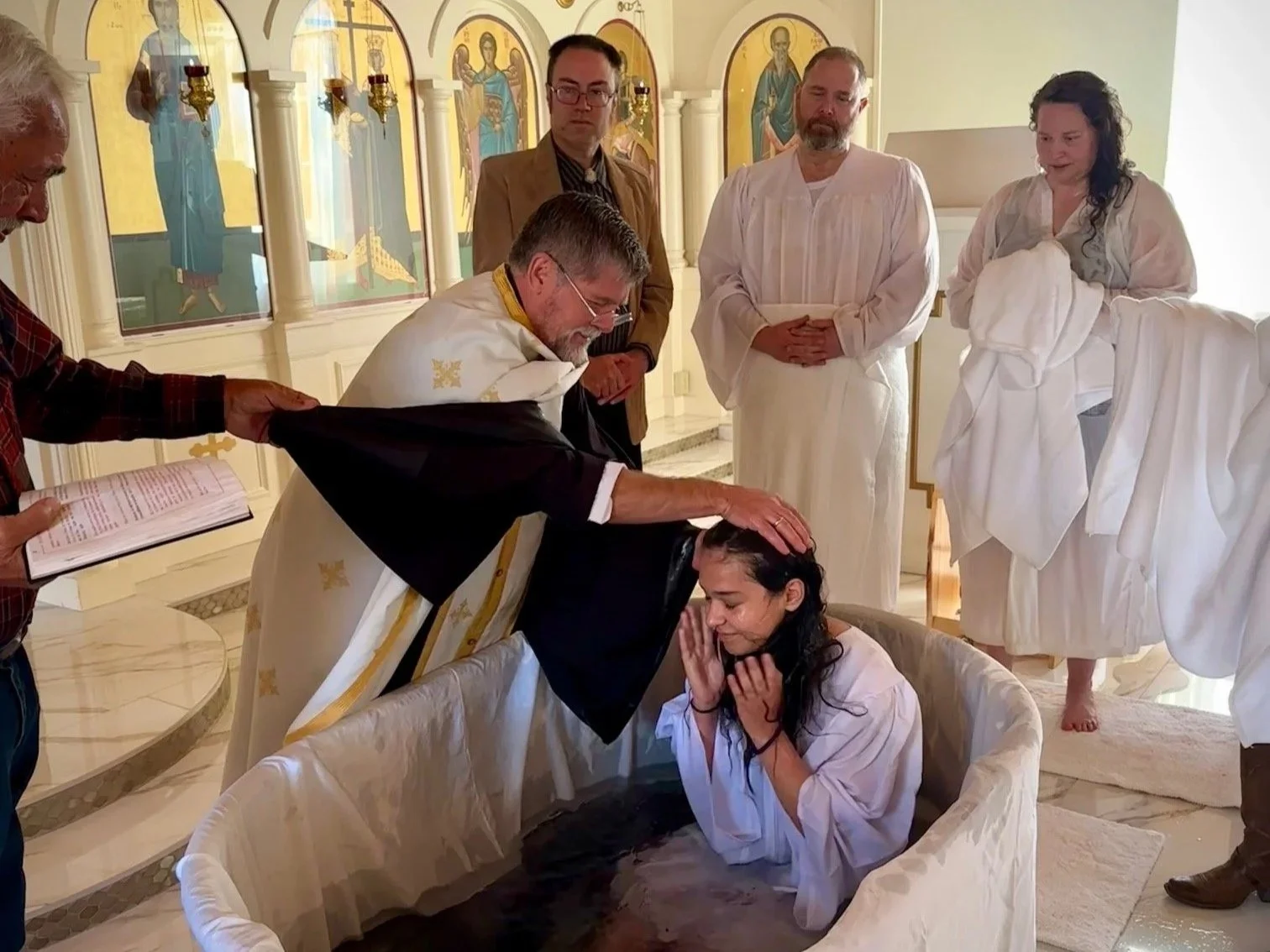
The Sacrament of Baptism incorporates us into the Church, the Body of Christ, and is our introduction to the life of the Holy Trinity. Water is a natural symbol of cleansing and newness of life. Through the three-fold immersion in the waters of Baptism in the Name of the Holy Trinity, one dies to the old ways of sin and is born to a new life in Christ. Baptism is one's public identification with Christ’s Death and victorious Resurrection. Following the custom of the early Church, Orthodoxy encourages the baptism of infants. The Church believes that the Sacrament is bearing witness to the action of God who chooses a child to be an important member of His people. From the day of their baptism, children are expected to mature in the life of the Spirit, through their family and the Church. The Baptism of adults is practiced when there was no previous baptism in the name of the Holy Trinity.
-
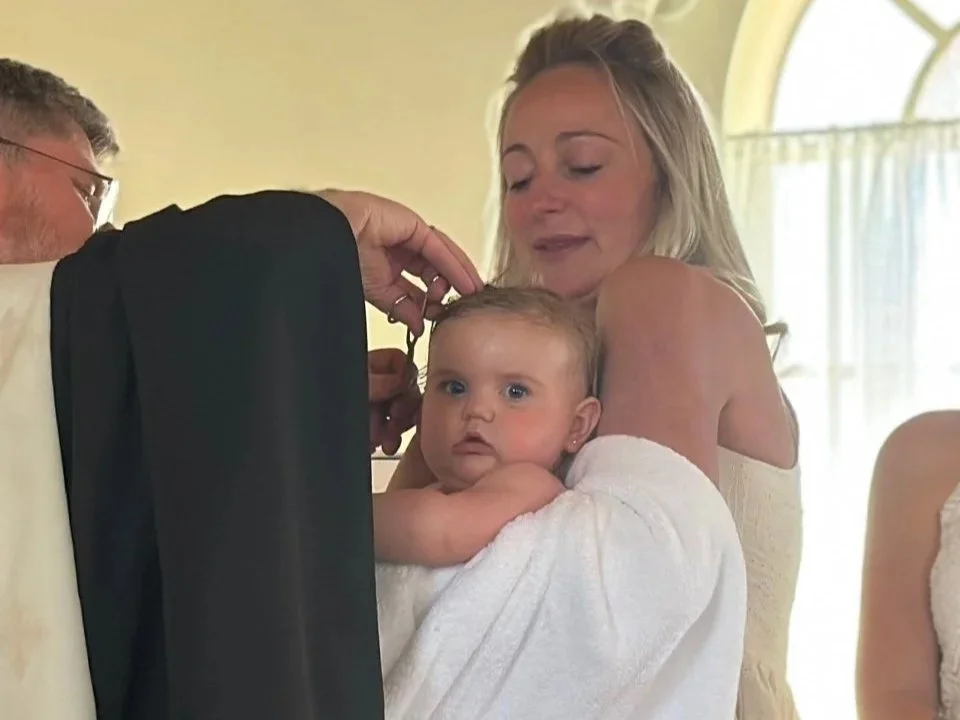
The Sacrament of Chrismation (Confirmation) immediately follows baptism and is never delayed until a later age. As the ministry of Christ was enlivened by the Spirit, and the preaching of the Apostles strengthened by the Spirit, so is the life of each Orthodox Christian sanctified by the Holy Spirit. Chrismation, which is often referred to as one's personal Pentecost, is the Sacrament which imparts the Spirit in a special way.
In the Sacrament of Chrismation, the priest anoints the various parts of the body of the newly-baptized with Holy Oil saying: "The seal of the gifts of the Holy Spirit." The Holy Oil, which is blessed by the bishop, is a sign of consecration and strength. The Sacrament emphasizes the truths that not only is each person a valuable member of the Church, but also each one is blessed by the Spirit with certain gifts and talents. The anointing also reminds us that our bodies are valuable and are involved in the process of salvation. -
God is active in our lives. It is He who joins a man and a woman in a relationship of mutual love. The Sacrament of Marriage bears witness to His action. Through this Sacrament, a man and a woman are publicly joined as husband and wife. They enter into a new relationship with each other, God, and the Church. Since Marriage is not viewed as a legal contract, there are no vows in the Sacrament. According to Orthodox teachings, Marriage is not simply a social institution, it is an eternal vocation of the kingdom. A husband and a wife are called by the Holy Spirit not only to live together but also to share their Christian life together so that each, with the aid of the other, may grow closer to God and become the persons they are meant to be.
In the Orthodox Marriage Service, after the couple have been betrothed and exchanged rings, they are crowned with "crowns of glory and honor" signifying the establishment of a new family under God. Near the conclusion of the Service, the husband and wife drink from a common cup which is reminiscent of the wedding of Cana and which symbolizes the sharing of the burdens and joys of their new life together.
-
As members of the Church, we have responsibilities to one another and, of course, to God. When we sin, our relationship to God and to others becomes distorted. Sin is ultimately alienation from God, from our fellow human beings, and from our own true self which is created in God's image and likeness.
Confession is the Sacrament through which our sins are forgiven, and our relationship to God and to others is restored and strengthened. Through the Sacrament, Christ our Lord continues to heal those broken in spirit and restore the Father's love those who are lost. According to Orthodox teaching, the penitent confesses to God and is forgiven by God. The priest is the sacramental witness who represents both Christ and His people. The priest is viewed not as a judge, but as a physician and guide. It is an ancient Orthodox practice for every Christian to have a spiritual father to whom one turns for spiritual advice and counsel. Confession can take place on any number of occasions. The frequency is left the discretion of the individual. In the event of serious sin, however, confession is a necessary preparation for Holy Communion.
-
When one is ill and in pain, this can very often be a time of life when one feels alone and isolated. The Sacrament of the Anointing of the Sick, or Holy Unction as it is also known, reminds us that when we are in pain, either physical, emotional, or spiritual, Christ is present with us through the ministry of His Church. He is among us to offer strength to meet the challenges of life, and even the approach of death.
As with Chrismation, oil is also used in this Sacrament as a sign of God's presence, strength, and forgiveness. After the reading of seven epistle lessons, seven gospel lessons and the offering of seven prayers, which are all devoted to healing, the priest anoints the body with the Holy Oil. Orthodoxy does not view this Sacrament as available only to those who are near death. It is offered to all who are sick in body, mind, or spirit. The Church celebrates this Sacrament for all its members during Holy week on Holy Wednesday. -
Through ordination, certain men who have been chosen from within the Church are set apart for special service as Deacons, Priests, and Bishops. Each is called by God through His people to stand amid the community, as pastor and teacher, and as the representative of the parish before the Altar.